Over the past twelve years, I have photographed more than 500 bird species in many corners of the world. Along the way, I discovered that birds are full of surprises. Some have wonderfully peculiar names, others possess extraordinary beaks or feet, and many display remarkable behaviour that is every bit as fascinating as their colourful plumage.
This collection isn't intended to be a field guide. Instead, it's a celebration of the birds that made me stop, smile, and wonder. My hope is that these pages will encourage you to look a little more closely at the birds around you—and perhaps even inspire you to take up birdwatching yourself.
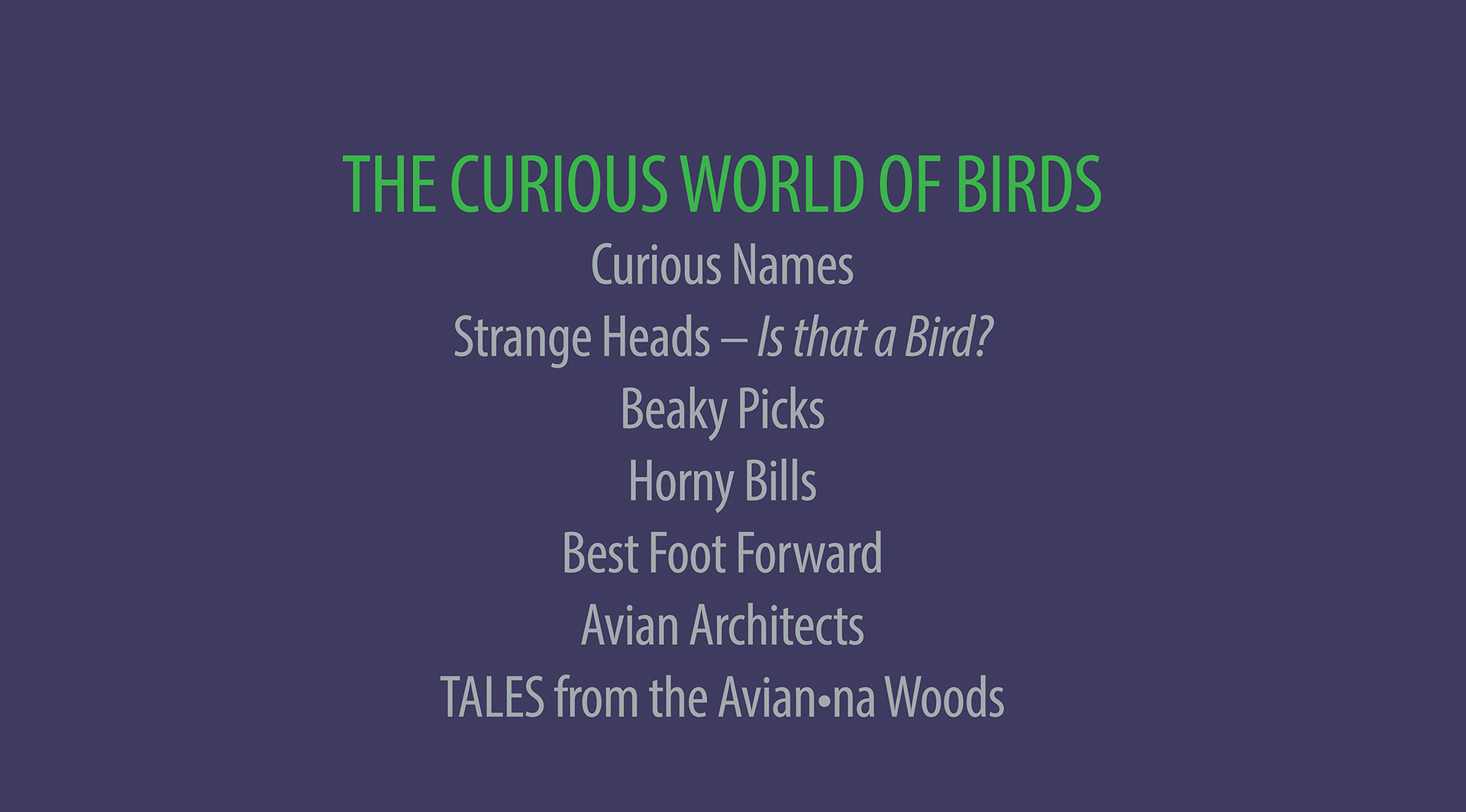
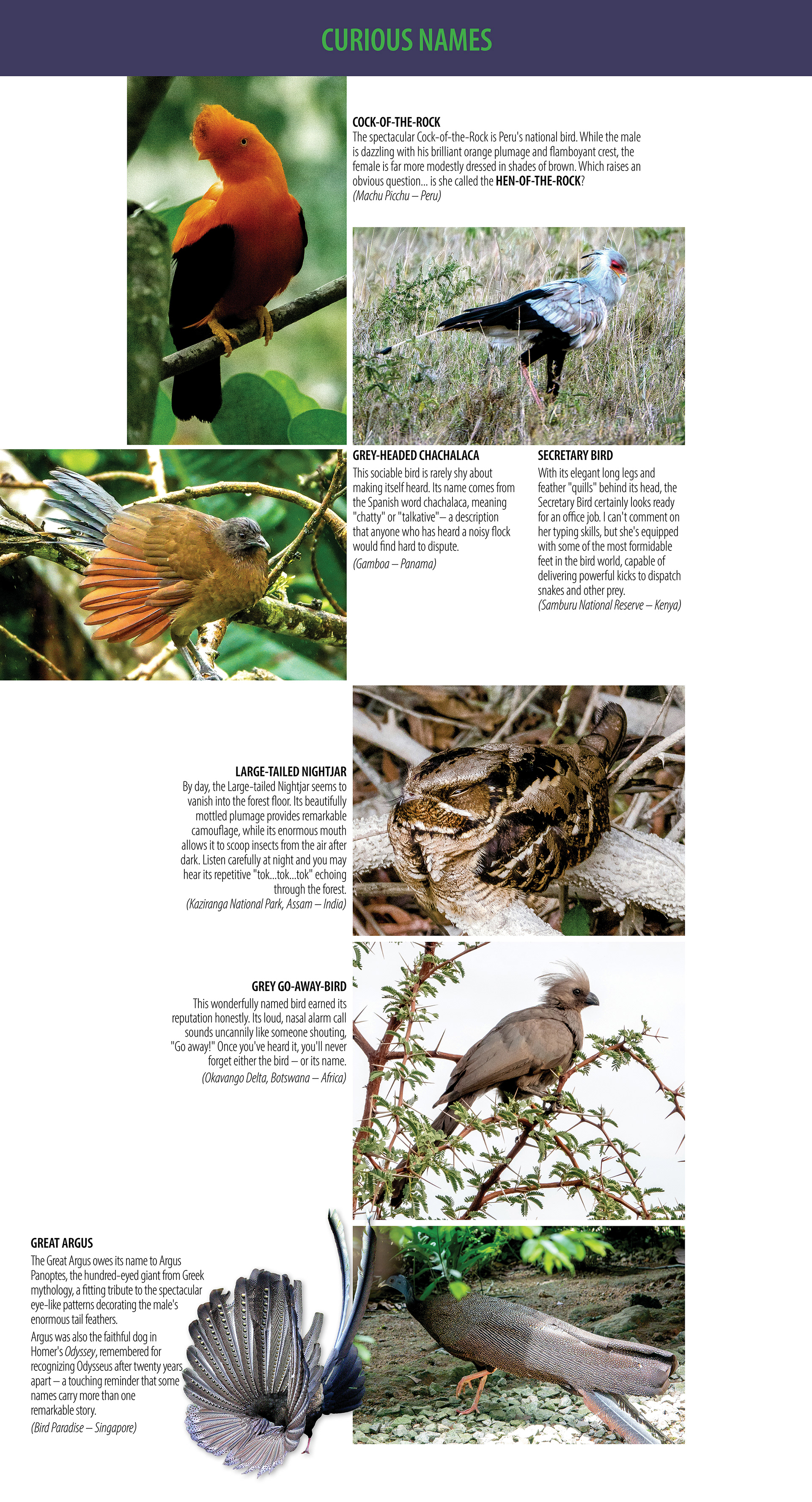
Who decided that a bird should be called a Cock-of-the-Rock, Chachalaca or Hoopoe? Some names describe a bird perfectly; others seem delightfully mysterious. Behind many of them lies a fascinating story, like the bird named after Odysseus’s dog, Argus.
Ever wondered who thought up these names?
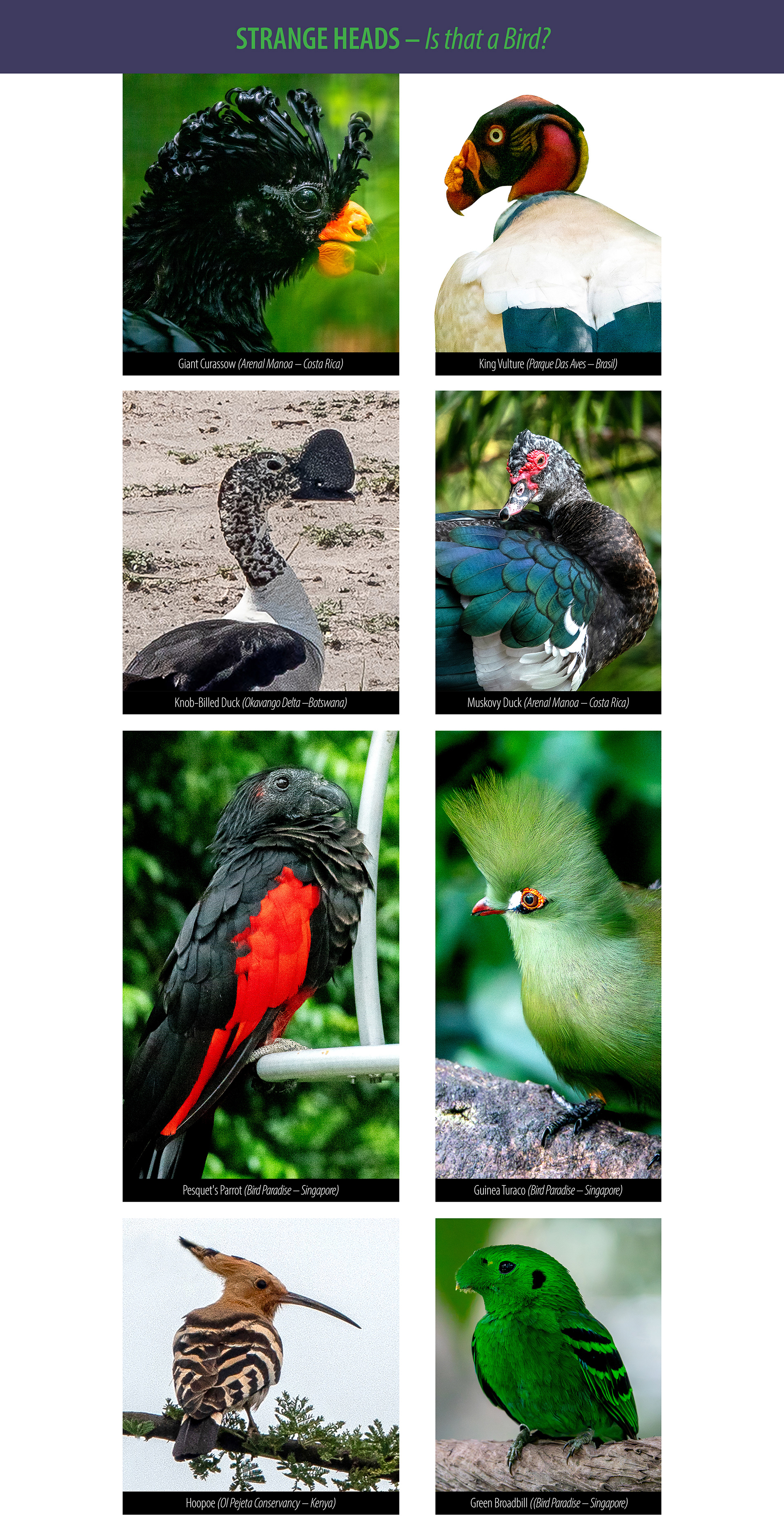
Some of species have rather unconventional heads.
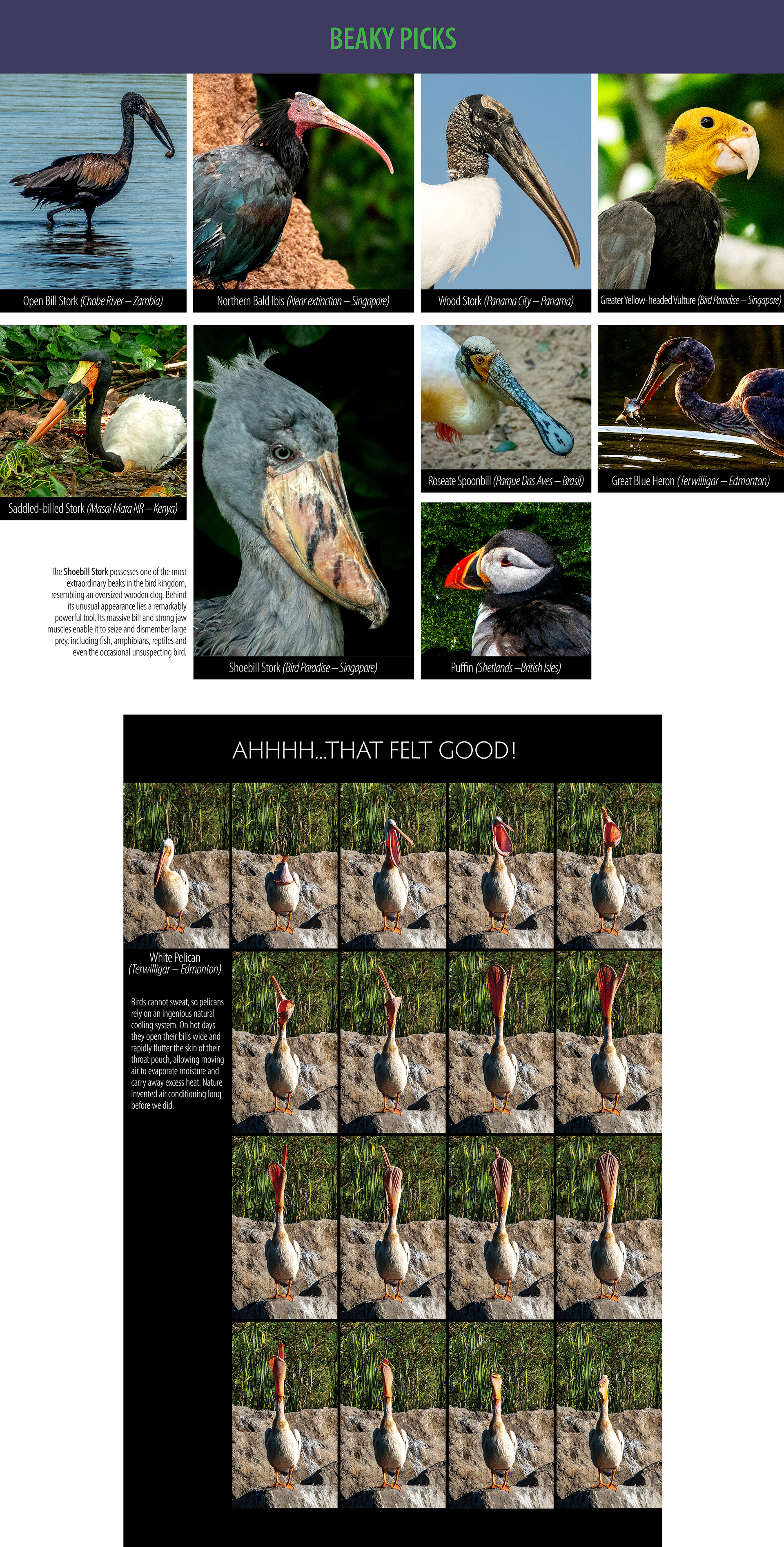
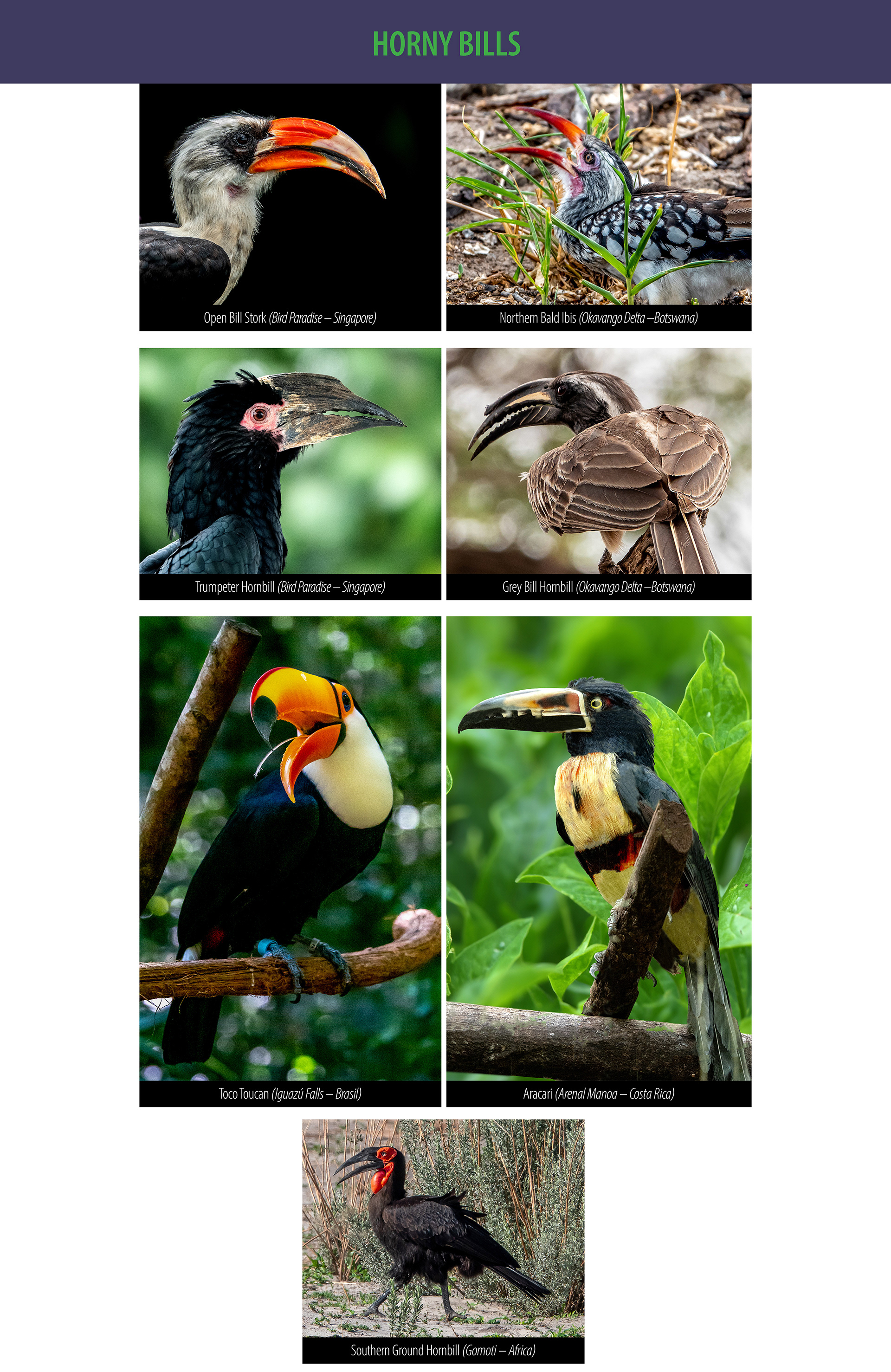
Bird beaks function primarily for eating, but they are also essential tools for preening feathers, building nests, and defending against predator.
Why would evolution create such extraordinary tools?
Hornbills have big beaks for feeding, amplifying loud calls, and staying cool in hot weather. Despite their massive size, the beaks are light and strong because they have a hollow, honeycomb-like internal structure made of keratin.
How can something so enormous still allow a bird to fly?
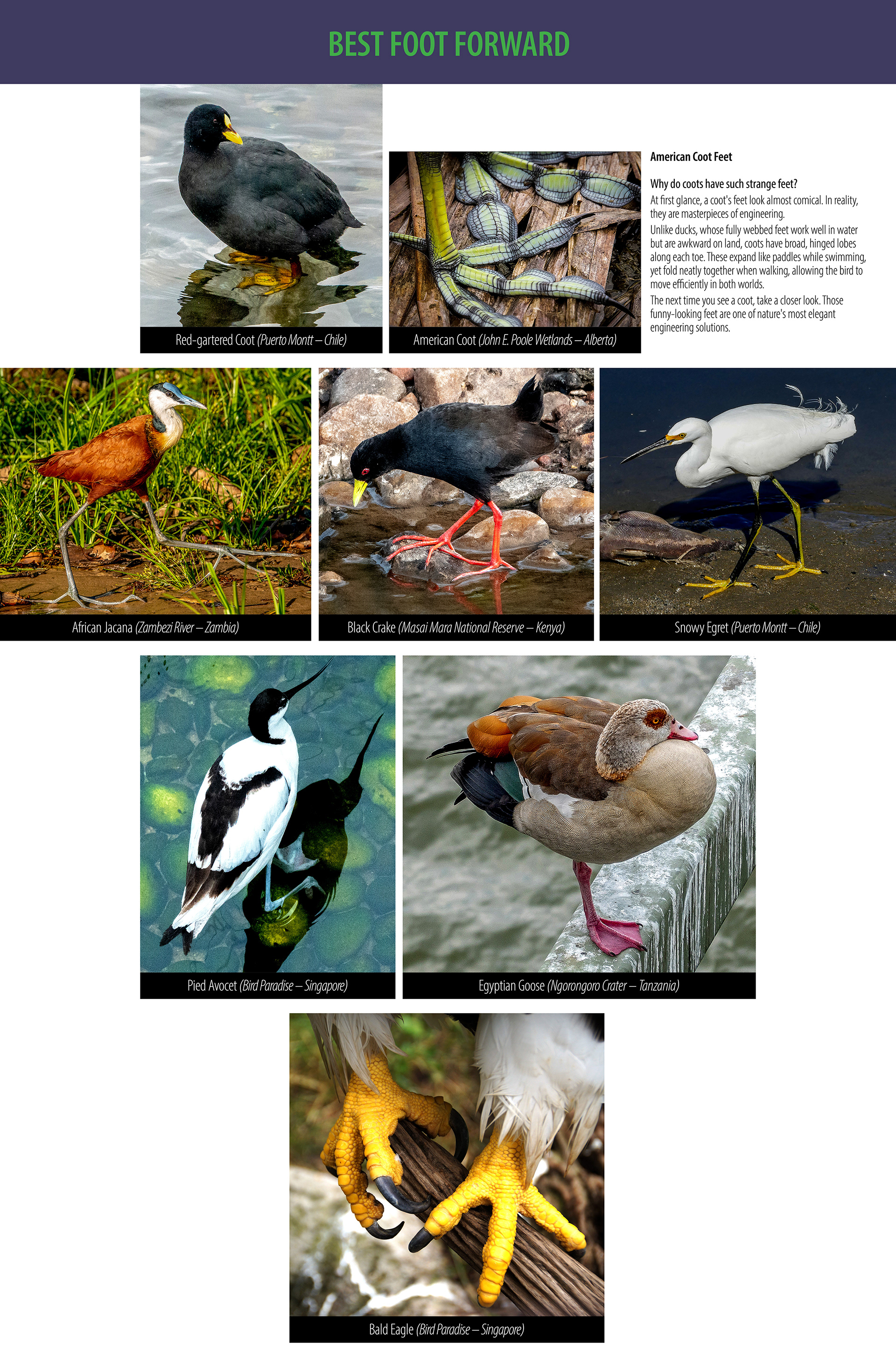
Birds have different types of feet because their toes and claws evolved to match their specific habitats, ways of moving, and feeding habits. The main designs include perching feet for gripping branches, webbed feet for swimming, and talons for catching food.
The first time I watched a Coot walk across the shoreline, I couldn't stop laughing. Those oversized lobed toes looked completely impractical—until I learned they are a brilliant compromise between walking on land and swimming in water.
Which bird has the strangest feet you've ever seen?
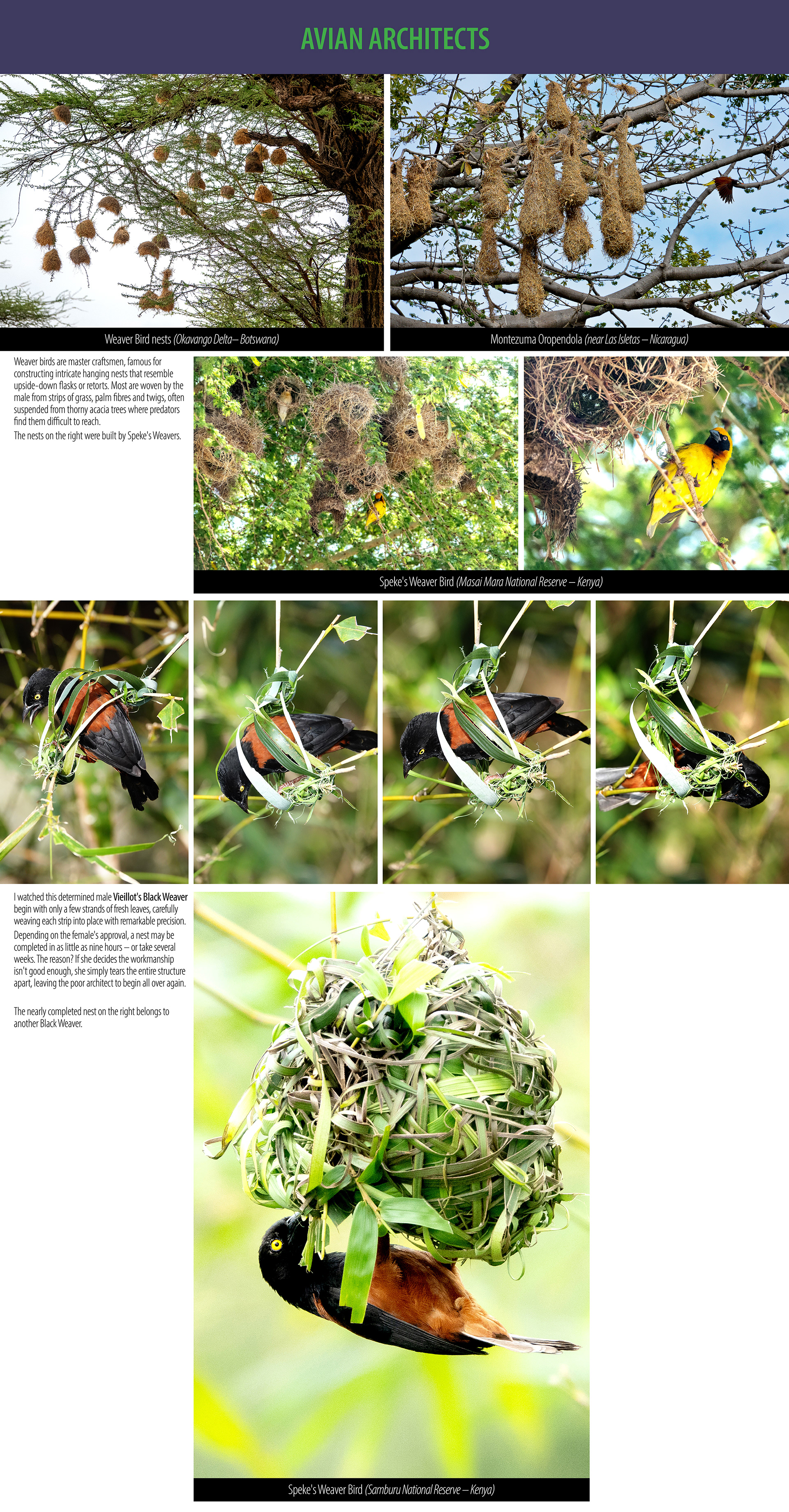
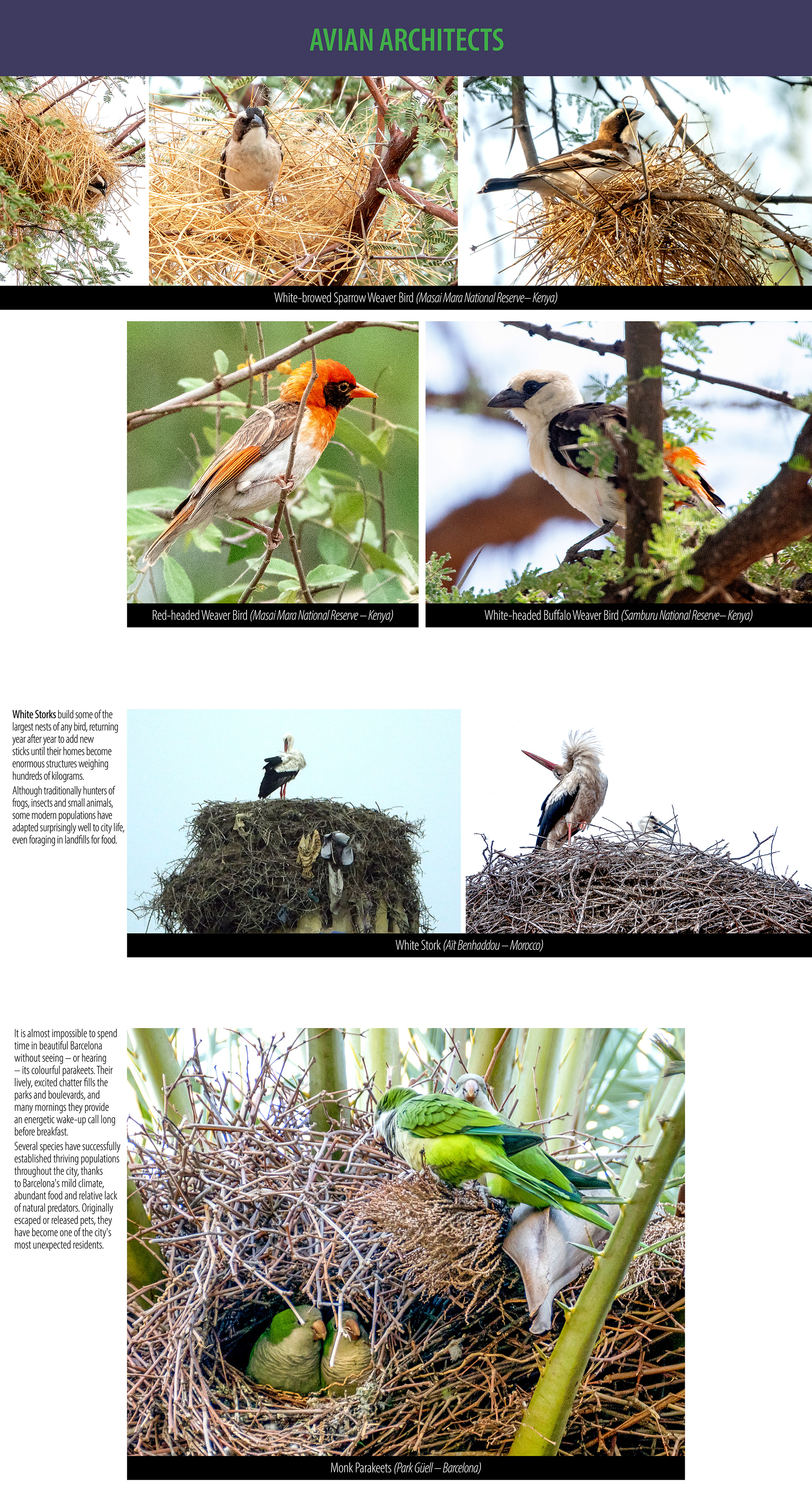
Throughout our travels, we have admired some of nature's finest architects. Birds build homes that are not only beautiful but also remarkably practical, using grasses, leaves, plant fibres, mud, spider silk and even feathers.
From delicately woven hanging pouches to enormous stick platforms used year after year, these remarkable structures demonstrate that good design is certainly not exclusive to humans.
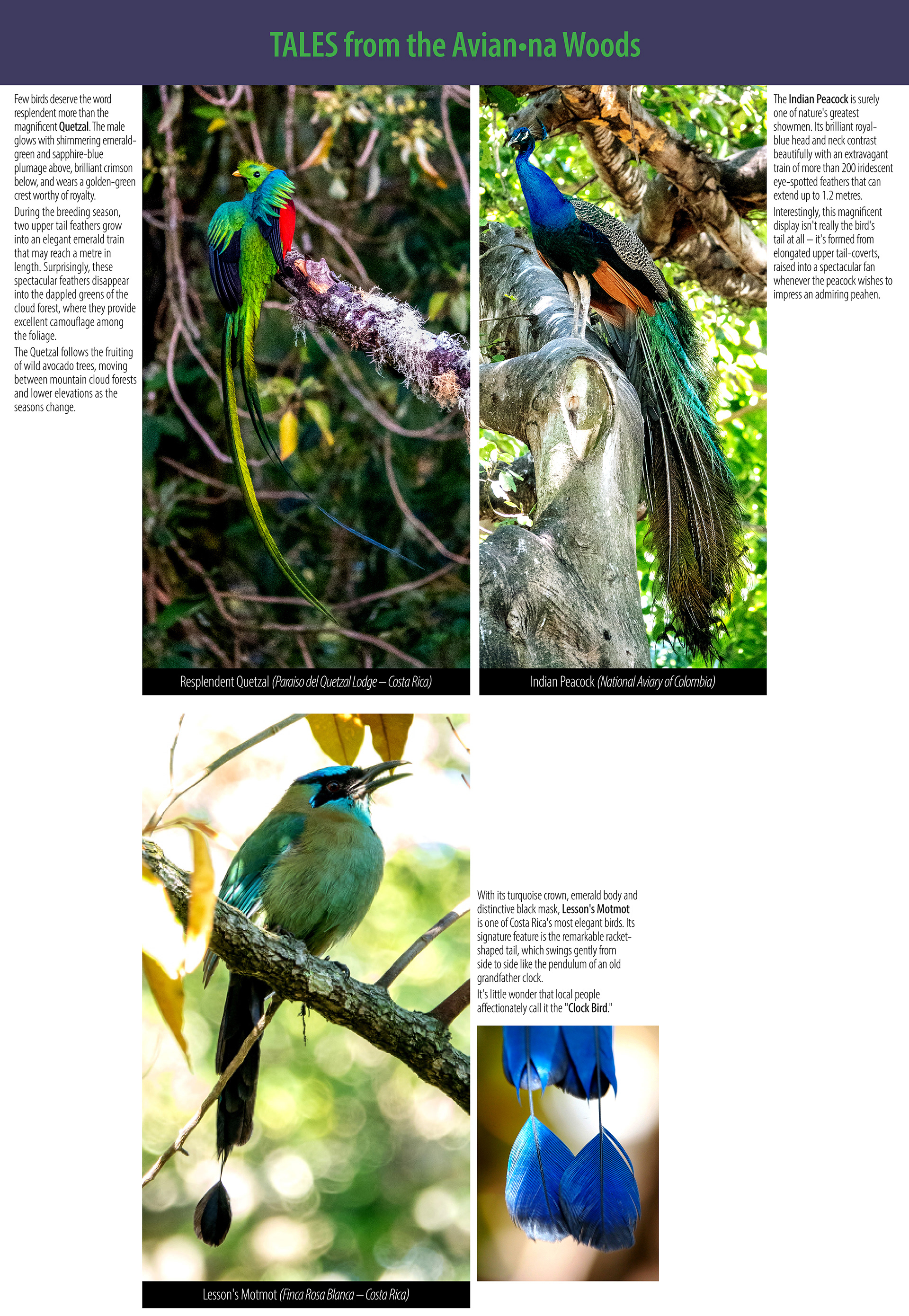
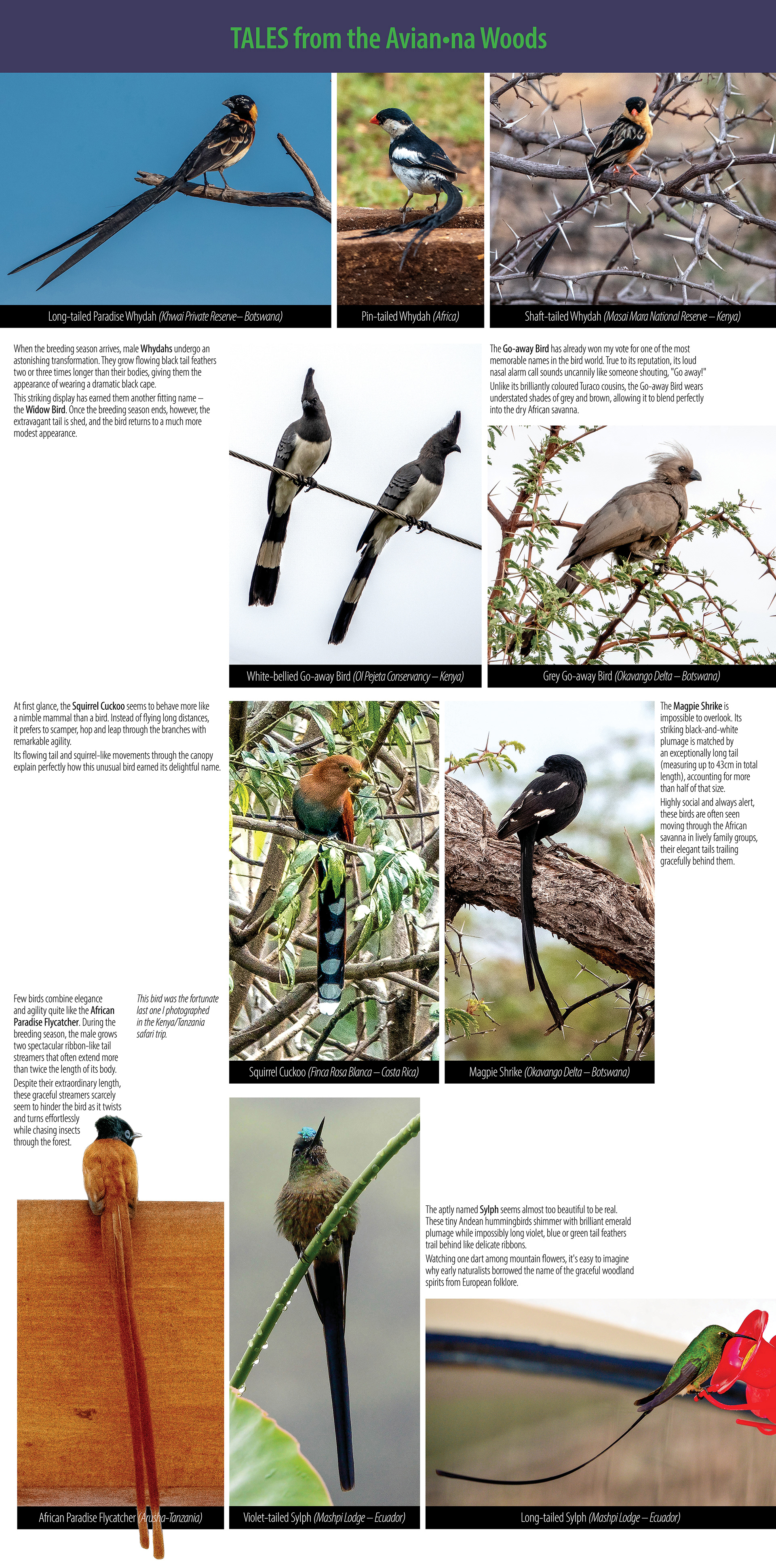
One of the delights of birdwatching is discovering that nature has a flair for the dramatic. Some birds seem determined to outdo one another with impossibly long tails that stream, sway, or flutter behind them in flight.
Whenever I photograph one of these elegant birds, I find myself asking the same question: How on earth do they manage to weave effortlessly through dense forests without getting hopelessly tangled? Somehow, nature has solved the problem with remarkable grace.
Here are a few of my favourite long-tailed performers.
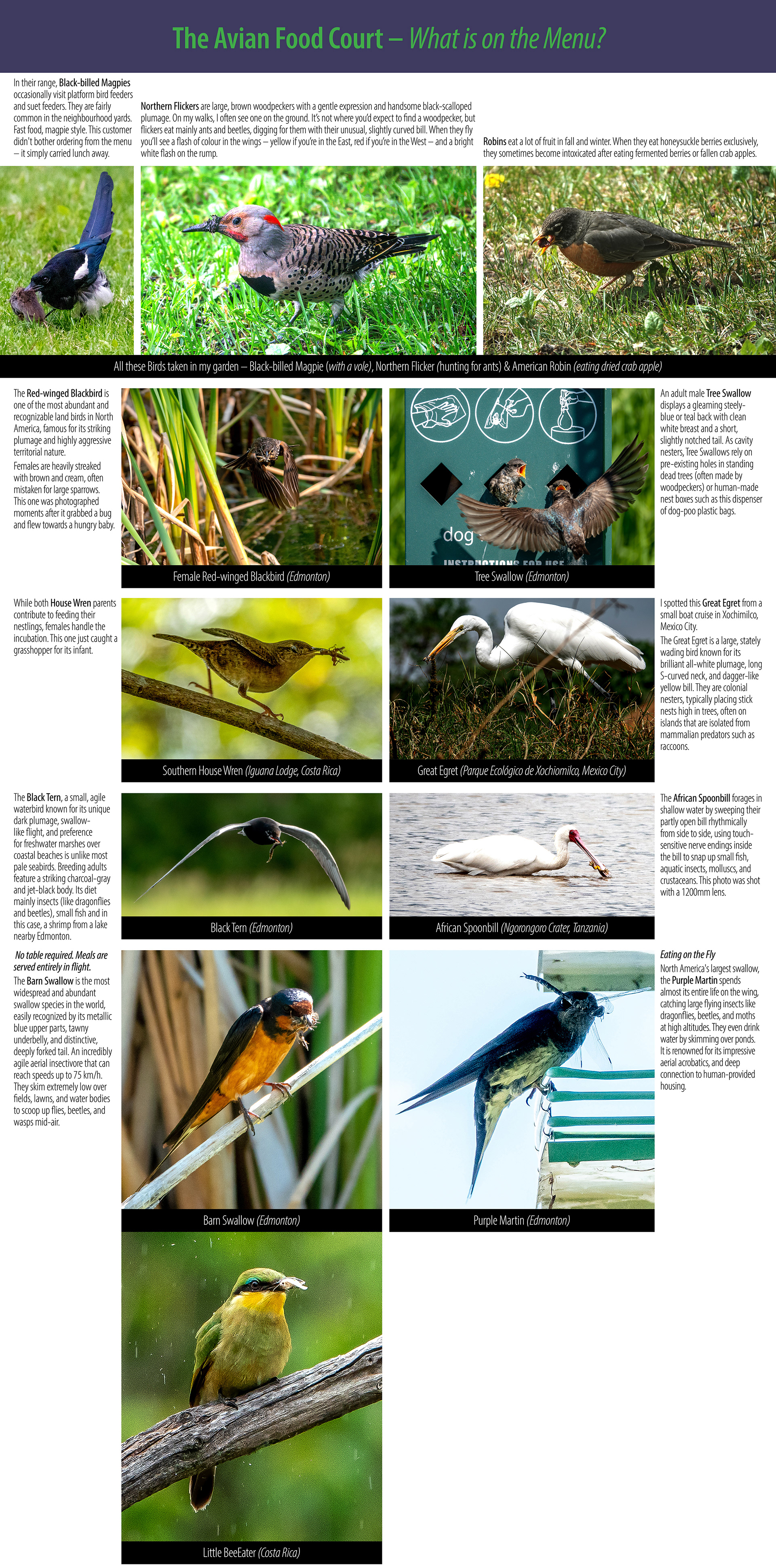
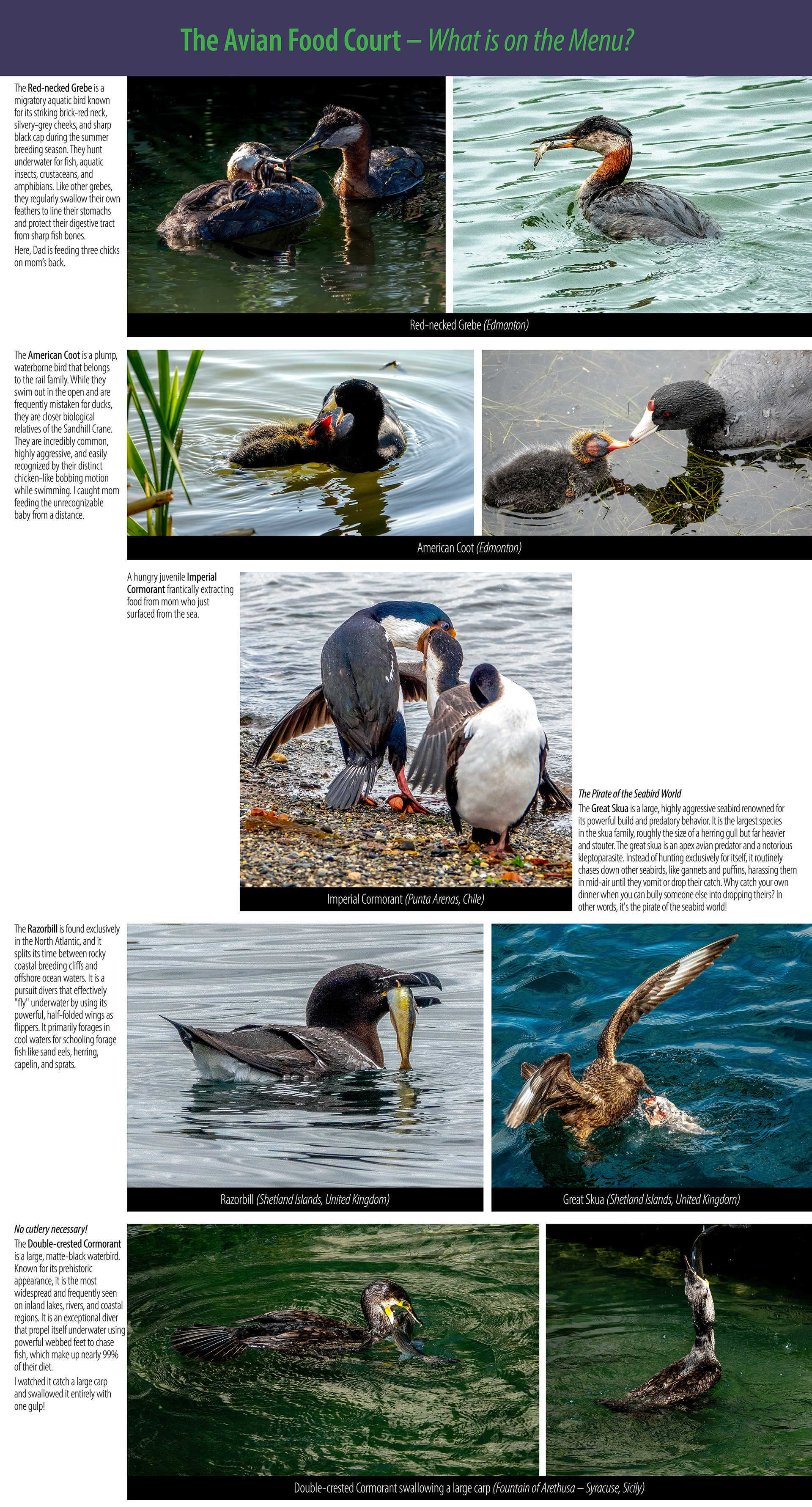
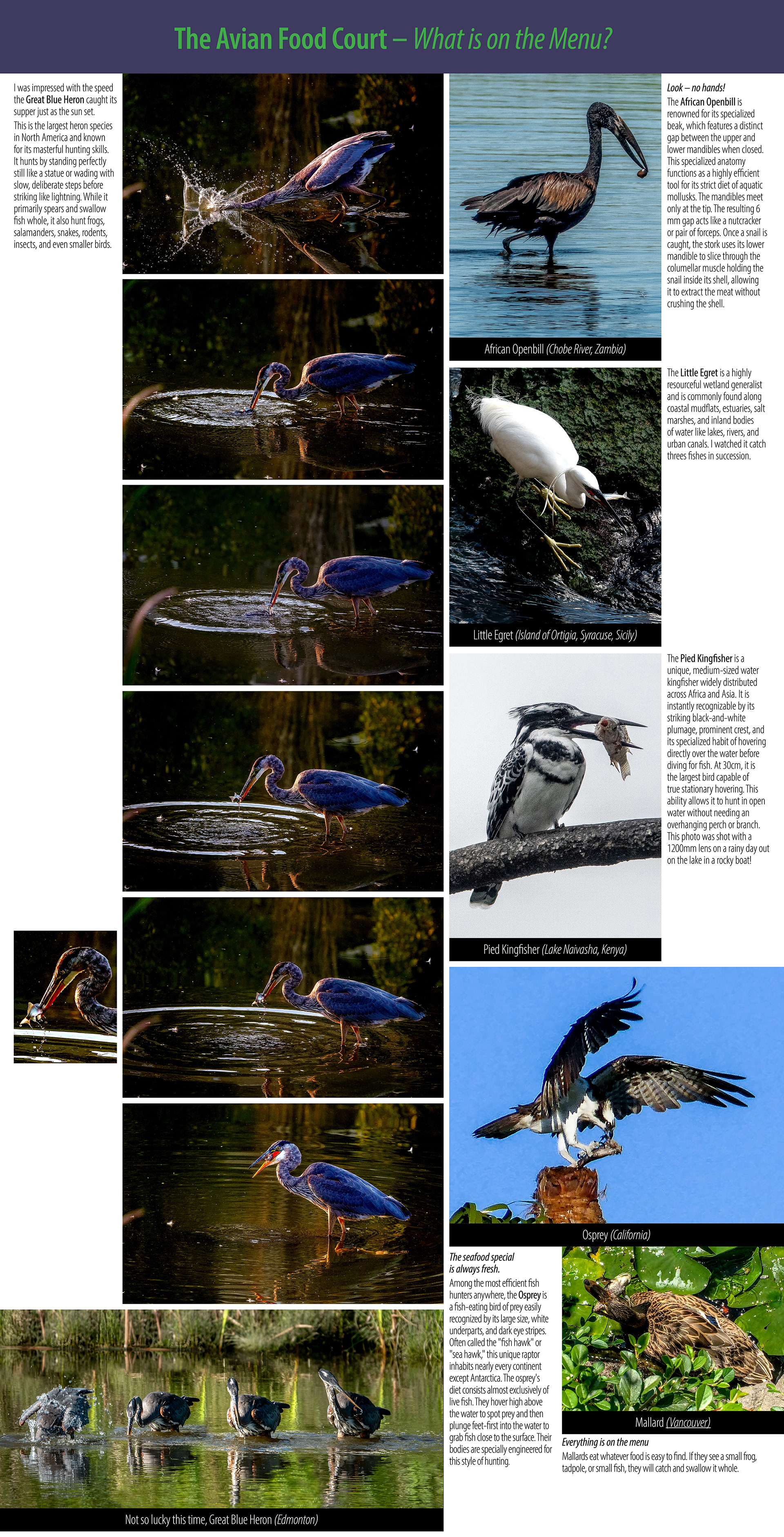
Most people think birds survive on little more than seeds and worms. In reality, their menus are astonishingly diverse, ranging from nectar and berries to insects, fish, frogs, rodents—even the occasional unlucky mollusc.
Welcome to The Avian Food Court, where every meal is caught, plucked, speared, swallowed, or stolen! None of these feathered diners knew a photographer was quietly watching as they tucked into breakfast, lunch, or dinner.
We'll begin with three familiar visitors from my own backyard before travelling to wetlands, forests, coastlines, and lakes around the world to see what's on the menu.